

Make Motherhood Calmer and Less Stressful
Motherhood can feel like managing hundreds of tiny decisions: what to cook, what to pack, what needs washing, what the children have outgrown and what must be remembered tomorrow. Adding sustainability to the list may sound like extra work, but the right eco-friendly habits can do the opposite. They can reduce choices, create predictable routines and help your family use what it already has.
Sustainable motherhood is not about running a perfect zero-waste home or replacing everything with expensive “green” products. It is about creating a few repeatable systems that make ordinary days easier. A flexible meal plan reduces last-minute shopping. A reusable essentials station prevents rushed searches. Buying fewer, more durable items reduces clutter and decision fatigue.
This practical approach matches environmental guidance that prioritises reducing, reusing, repairing and recycling. Food planning and storage can also help households buy only what they need and use more of what they purchase. Parental wellbeing guidance commonly recommends realistic routines, rest and simple calming practices rather than perfection.
The goal is simple: make the sustainable option the easy option. Start with one habit that solves a real problem in your home.
| Habit | Environmental Benefit | Calming Benefit | Easy First Step |
|---|---|---|---|
| Reusable essentials station | Reduces disposable-item use | Prevents last-minute searching | Place bags, bottles and containers together |
| Flexible meal planning | Helps prevent food waste | Reduces daily dinner decisions | Plan three meals and two backups |
| Low-waste snack system | Cuts packaging waste | Makes outings easier | Prepare one grab-and-go snack area |
| Simple laundry rhythm | Saves water and energy | Prevents overwhelming clothing piles | Assign regular laundry days |
| Gradual decluttering | Encourages reuse and donation | Reduces visual clutter | Remove five items each week |
| Regular nature time | Reduces consumption-based entertainment | Creates a low-cost family reset | Schedule one local walk |
| Automatic water-saving | Conserves water and energy | Reduces repeated reminders | Turn off taps while brushing |
| Five-minute energy reset | Cuts unnecessary energy use | Creates an evening closing routine | Switch off unused lights and devices |
| Thoughtful purchasing | Reduces waste and overconsumption | Limits clutter and shopping decisions | Wait 48 hours before non-essential purchases |
| Gentle evening reset | Supports consistent habits | Makes mornings calmer | Reset one surface and pack essentials |
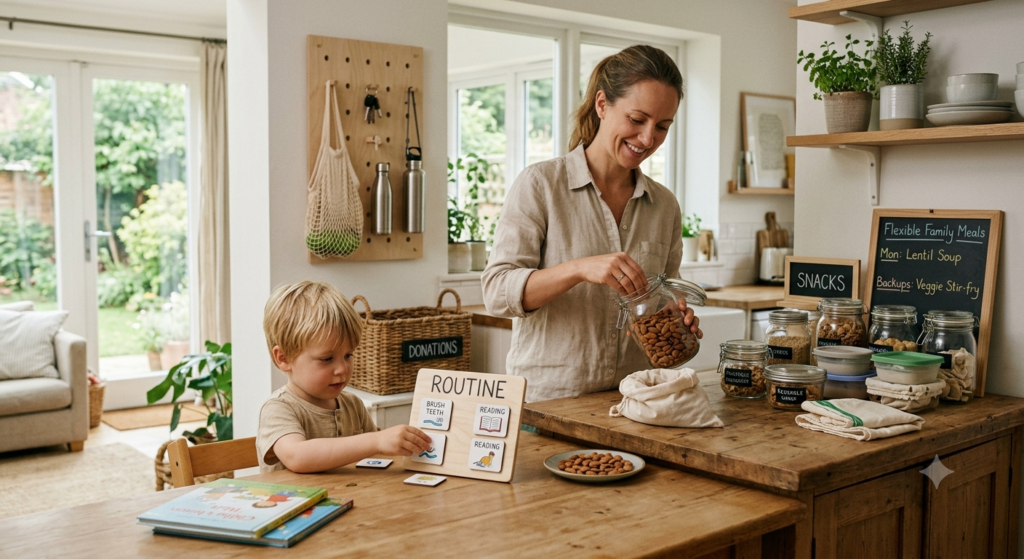
1. Create a Reusable Essentials Station
Reusable products only simplify life when they are easy to find. Choose one shelf, basket, or drawer near the door and keep your family’s most-used items together:
- Reusable shopping bags
- Refillable water bottles
- Lunch boxes and snack containers
- Travel cutlery
- Cloth napkins
- A washable wet bag
- A reusable coffee cup
After washing an item, return it directly to the station. Children who are old enough can help refill bottles or place containers in their bags. Avoid buying a complete matching set unless it is genuinely needed. Start with jars, bags, and containers you already own.
This habit removes a common source of morning stress. Instead of searching several cupboards before leaving, the family knows exactly where to look.
2. Use a Flexible Weekly Meal Plan
A strict seven-day menu can become another rule to follow. A flexible plan is easier:
- Three planned main meals
- One leftovers night
- One freezer or pantry meal
- One quick family favourite
- One flexible night
Before shopping, check the fridge, freezer and cupboards. Build meals around ingredients that need to be used first, and keep an “eat me first” section for ripe fruit, leftovers and opened foods.
Preventing food waste also saves the water, land and energy used to produce, transport and store food. Environmental guidance recommends planning, preparing and storing food carefully so households buy what they need and eat what they purchase.
Repeat dependable meals without guilt. Children do not need a brand-new menu every day, and busy mothers do not need to turn dinner into a daily creativity challenge.
3. Build a Low-Waste Snack System
Packaged snacks are convenient because they are ready immediately. A sustainable alternative must be just as easy.
Create a snack basket that children can access safely. Depending on their ages and dietary needs, it might contain fruit, crackers, oat bars, dried fruit, or small containers of cereal. Keep prepared fridge snacks in one clearly labelled area.
For outings, use a simple snack formula:
- One fresh item
- One filling item
- One easy backup
- One filled water bottle
Prepare several portions at once instead of starting from scratch every morning. The aim is not to eliminate every wrapper. It is to reduce unnecessary packaging while keeping realistic options available.
A calm low-waste home can still include packaged snacks for travel, emergencies or difficult days. Consistency matters more than perfection.
4. Follow a Simple Laundry Rhythm
Laundry becomes stressful when every item feels urgent. Create two or three regular categories, such as everyday clothes, towels and bedding, and special items.
Run full loads when practical, follow garment and detergent instructions, and air-dry suitable items when your home and weather allow. Give each family member a basket or use one clearly defined folding area.
Lowering the standard can also reduce pressure. Children’s clothes do not always need perfect folding; they can go directly into labelled drawers. A “wear again” hook stops lightly used clothing from landing on the floor or being washed unnecessarily.
The environmental and emotional goals are connected: fewer unnecessary cycles, fewer piles and fewer decisions.
5. Declutter Gradually and Responsibly
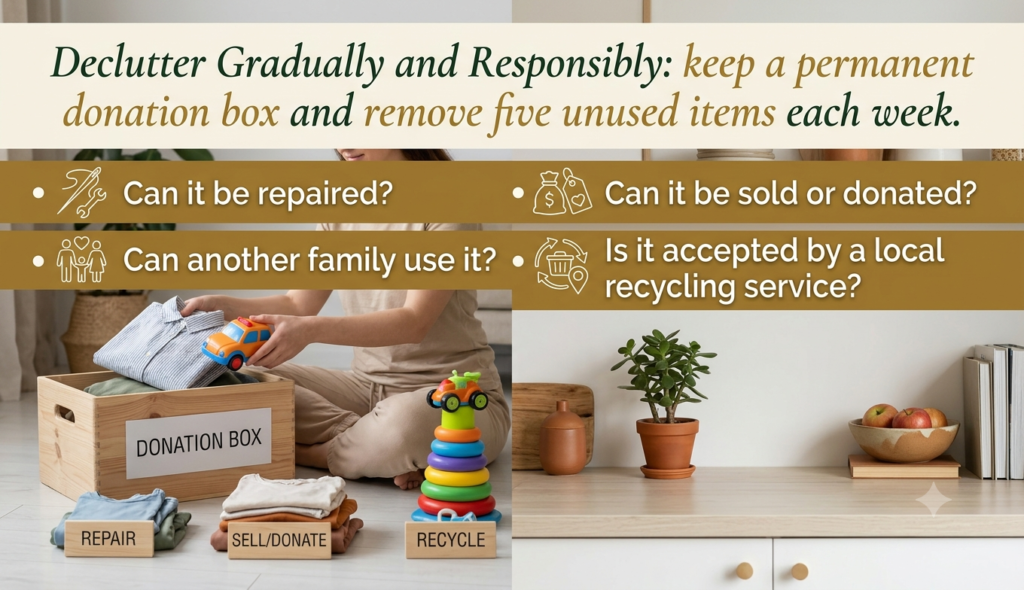
Clutter creates repeated work because belongings must be moved, cleaned, stored and searched through. Instead of attempting a dramatic weekend clear-out, keep a permanent donation box and remove five unused items each week.
Begin with high-friction areas such as the entrance, kitchen counter, children’s clothing, toys and bathroom products. Before discarding something, ask:
- Can it be repaired?
- Can another family use it?
- Can it be sold or donated?
- Is it accepted by a local recycling service?
Environmental agencies recommend reducing, reusing, and repairing before disposal. Buying used clothing and household goods can also reduce waste.
Involve family members before removing meaningful belongings. A calmer home comes from shared decisions and steady progress.
6. Replace Some Shopping with Nature Time
Family entertainment can easily become connected to spending: shopping centres, new toys, paid activities or impulse treats. Nature time offers a simpler reset.
Try a neighbourhood walk, playground visit, picnic, garden activity or local park. Keep the routine easy enough to repeat; a twenty-minute after-school walk may be more manageable than an ambitious outing that requires hours of preparation.
Prepare a small outdoor bag with water, tissues, sunscreen when needed, and a spare layer. Children can look for birds, notice seasonal changes, or collect fallen leaves.
Nature time is not a guaranteed solution to stress, but a change of environment can interrupt a tense afternoon. It provides movement, connection and a break from household noise without adding more possessions to the home.
7. Make Water-Saving Automatic
Water conservation is easier when it becomes routine instead of another source of reminders. Choose a few actions the whole family can follow:
- Turn off the tap while brushing teeth
- Avoid leaving water running unnecessarily
- Keep showers reasonably short
- Wash full loads of laundry and dishes
- Repair dripping taps and running toilets
- Use leftover drinking water for suitable plants
Heating and pumping water require energy, so saving water can also reduce energy use. Household leaks can waste significant amounts of water, which makes regular checks worthwhile.
Use one simple family phrase, such as “soap first, tap second,” rather than explaining the issue repeatedly. A small reminder near the sink can do the remembering for you.
8. Do a Five-Minute Family Energy Reset
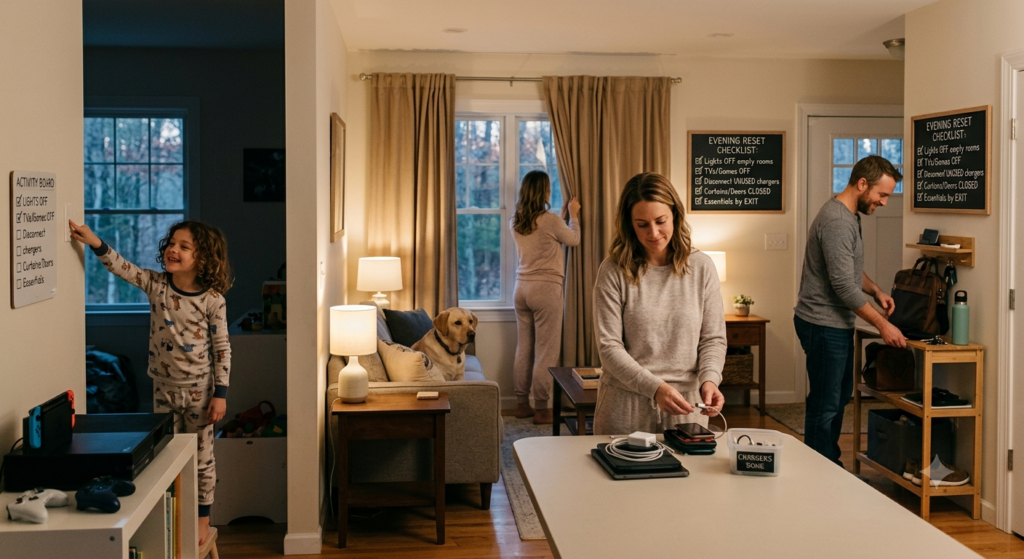
An evening energy reset can reduce unnecessary electricity use while signalling that the busy part of the day is ending.
During the reset:
- Turn off lights in empty rooms
- Switch off televisions and game systems
- Disconnect chargers that are no longer needed when safe
- Close curtains or doors according to the season
- Put tomorrow’s essential items near the exit
Children can manage one age-appropriate zone, such as checking their bedroom light. Keep the routine cooperative rather than turning it into an inspection.
Do not replace every working appliance simply to purchase a greener version. Use what you have responsibly, maintain it, and choose an efficient model when replacement is genuinely necessary. Reducing and reusing are central parts of practical environmental action.
9. Buy Less and Choose Durable Items
Shopping can solve one problem while creating others: more clutter, packaging, cleaning and storage. For non-essential purchases, wait 48 hours and ask:
- Do we already own something suitable?
- Can we borrow, repair or buy it second-hand?
- Will we use it regularly?
- Is it easy to clean and store?
- Is the environmental claim specific?
- What happens when we no longer need it?
Be cautious with vague labels such as “green,” “natural” or “eco-safe.” Consumers are advised to look beyond general claims and consider credible ecolabels and specific product features.
Local swaps and second-hand shops can be useful for children’s clothing, books and toys. For safety-sensitive baby equipment, check current safety advice, condition and recall information before accepting a used item.
10. End the Day with a Gentle Reset
Spend ten minutes preparing for tomorrow, but set a stopping point so the reset does not become a late-night cleaning session.
Choose four or five actions:
- Return reusable bags and bottles to their station
- Move food that needs using to the front of the fridge
- Pack school or childcare essentials
- Clear one main surface
- Place laundry in the correct basket
- Write tomorrow’s top three priorities
- Take several slow, comfortable breaths
Simple breathing exercises can be practised in a few minutes, and NHS guidance suggests they may be most helpful when used regularly as part of a routine.
Stop when the timer ends. The purpose is to make tomorrow easier, not to finish the entire house.
Low-Stress Sustainable Swaps
| Stressful Pattern | Calmer Eco-Friendly Swap | Why It Helps |
|---|---|---|
| Deciding dinner at 5 p.m. | Plan three meals plus backups | Reduces urgent decisions and food waste |
| Searching for bottles and bags | Keep one essentials station | Makes leaving home faster |
| Washing random small loads | Use regular laundry categories | Reduces resource use and mental tracking |
| Buying organisers for clutter | Remove unused items first | Creates real space without more purchases |
| Buying entertainment every weekend | Plan a walk, park visit or picnic | Encourages connection without adding possessions |
| Replacing every product with a “green” version | Use safe products fully and replace when needed | Prevents waste and unnecessary spending |
| Changing the whole household at once | Introduce one habit at a time | Makes change easier to maintain |
| Cleaning late into the night | Use a timed ten-minute reset | Protects rest and creates a clear finish |
How to Make These Habits Stick
The best routine is not the most ambitious one. It is the one your family can repeat during an ordinary, imperfect week.
- Start with your biggest source of friction. If mornings are chaotic, organise reusable essentials first. If dinner causes stress, begin with meal planning.
- Change one habit at a time. Give everyone time to learn the system.
- Make the desired action visible. Put bags by the door, a donation box in a cupboard and an “eat first” container in the fridge.
- Share responsibility. Partners and children can refill bottles, sort laundry, turn off lights or help choose meals.
- Keep an emergency version. A freezer meal, spare bag or packaged snack can protect the routine on difficult days.
- Measure ease, not perfection. Ask whether the habit saves time, reduces waste or prevents repeated decisions.
- Review the system when life changes. School schedules, work patterns and seasons may require adjustments.
Final Thoughts
Eco-friendly motherhood should not become another performance standard. The calmest approach is built on fewer purchases, clearer systems, realistic expectations and shared responsibility.
You do not need to start all ten habits this week. Select one that removes a recurring frustration and practise it until it feels normal. A basket by the door can prevent a rushed search. A flexible meal plan can rescue a tiring evening. A ten-minute reset can make tomorrow morning gentler.
Sustainability becomes meaningful when it supports real family life. Choose progress over perfection, usefulness over appearance, and routines that care for both your household and the environment.
Frequently Asked Questions About Eco-Friendly Motherhood
1. What are eco-friendly habits for mothers?
Eco-friendly habits for mothers are simple daily actions that reduce waste, save energy, conserve water and make family routines more sustainable. Examples include using reusable bags and bottles, planning meals, buying second-hand items, reducing unnecessary purchases and washing full loads of laundry. These habits can also make motherhood calmer by reducing clutter, repeated decisions and last-minute tasks.
2. How can eco-friendly habits make motherhood less stressful?
Eco-friendly routines can reduce stress by creating predictable systems at home. A weekly meal plan removes the pressure of deciding what to cook every evening, while a reusable essentials station makes it easier to leave the house on time. Decluttering, organising laundry and preparing items the night before can also reduce visual mess and mental overload.
3. What is the easiest eco-friendly habit for a busy mother?
One of the easiest habits is keeping reusable shopping bags, water bottles, lunch boxes and snack containers in one convenient place. This requires very little time or money and can immediately simplify school mornings, shopping trips and family outings. Another easy option is planning three main meals each week instead of creating a complicated seven-day menu.
4. Do eco-friendly families need to live a zero-waste lifestyle?
No. Families do not need to follow a perfect zero-waste lifestyle to make a positive difference. Sustainable motherhood is about making realistic improvements that work with your family’s schedule, budget and needs. Reducing a few disposable items, preventing food waste and buying fewer unnecessary products can still create meaningful results.
5. Is sustainable motherhood expensive?
Sustainable motherhood does not have to be expensive. In many cases, it can save money because it encourages families to reuse existing items, repair belongings, reduce food waste and avoid impulse purchases. You do not need to replace every household product with a new eco-friendly version. Using what you already own is often the most affordable and sustainable choice.
6. How can mothers reduce food waste at home?
Mothers can reduce food waste by checking the fridge and cupboards before shopping, planning meals around ingredients already available, and storing leftovers clearly. Creating an “eat first” section in the fridge can help family members notice foods that should be used soon. Freezing extra portions and keeping simple backup meals can also prevent food from being thrown away.
7. How can children participate in eco-friendly family habits?
Children can help with small, age-appropriate responsibilities. They may refill water bottles, place reusable bags near the door, switch off lights, sort laundry, or help choose meals. The task should be simple and repeatable so it becomes part of the family routine rather than another complicated rule.
8. What are some low-waste snack ideas for children?
Low-waste snack options may include fresh fruit, crackers, homemade oat bars, chopped vegetables, yoghurt in reusable containers or cereal divided into small snack boxes. Families can prepare several portions at once to save time.